
An ISO 9001:2015/ISO 45001:2018/14001:2015 & CE & WHO GMP Certified Company

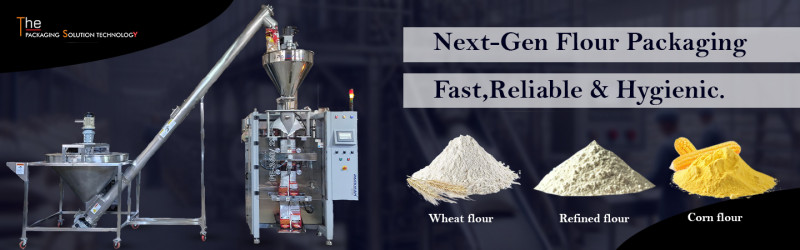
India’s consumption of flour and Atta remains one of the highest in the world — with wheat flour alone forming the base of daily diets for over a billion people. As the country’s food processing and retail markets grow, manufacturers are no longer competing just on price or quality of flour; packaging has become a key differentiator that determines shelf appeal, hygiene, brand trust, and export readiness.
Pouch packing machines for flour and Atta are central to this transformation — enabling precise weighing, robust sealing, and consistent pouch quality at scale. In this blog, we explore how modern flour packaging systems work, why Indian manufacturers are investing in them, and what real production environments demand from such machines.
Why Flour & Atta Pouch Packing Machines Matter in India
Traditional bulk packaging methods — like manual bagging or semi-automatic systems — struggle to match the demands of today’s market:
In contrast, automatic flour and Atta pouch packing machines help processors achieve:
Higher throughput and uptime
Stable weights with minimal giveaway
Strong seals for product freshness
Compatible formats from small sachets to 5 kg packs
Reduced labour costs and human error
This aligns with the broader trend in packaging technology seen across global markets — from food powders to industrial granules
Core Applications in Indian Production Lines
India’s top segment by volume — ranging from 1 kg retail packs to 10 kg family packs.
Fine milling products with variable flow behavior.
Cassava, Multigrain & Fortified Flours
Blends with inconsistent particle sizes needing careful dosing control.
Heavier granules with different hopper and feeder requirements.
How Modern Flour & Atta Machines Actually Work (Engineering Reality)
A typical automatic flour pouch packing line includes:
Successful implementation depends on seamless synchronization between feeding, dosing, sealing and discharge — a key reason why generic or mis-matched systems often underperform.
Engineering Highlights of Flour & Atta Pouch Machines
Flour packaging films often vary in thickness and print tolerance. Packman systems use:
Flour dust can cause machine wear and hygiene issues. Engineering measures include:
Flour packaging needs strong seals to prevent moisture, infestation and breakage:
Popular Pouch Formats for Flour & Atta
Indian customers typically use:
Machines that handle quick format changeover become critical in multi-SKU operations.
What Indian Manufacturers Look for Before Choosing a Line
Accuracy & Consistency
is the mean weight deviation ±1–2 g after 8 hours of continuous run?
Throughput & Downtime
Does the machine sustains 70–120 packs/min without frequent stoppage?
Operator Accessibility
Are bedplates, hoppers, and sealing assemblies easy to clean and maintain?
Film Flexibility
Can it adapt to PET/PE, BOPP/PE, or compostable films without major retooling?
Integration with QA Tools
Metal detector, check-weigher, and coders must work seamlessly in-line.
Turnkey Packaging Lines for Flour & Atta Products
To avoid performance gaps between isolated machines, modern lines integrate:
This ensures continuous, reliable output suitable for high-volume millers, co-packers and branded packagers.
Why Packman Engineering Flour Packaging Systems Are Trusted
Designed for Indian products and environments
Robust stainless steel fabrication
Built for continuous 16–20 hour production
Quick tool-less changeovers between SKUs
Remote support & documentation
Competitive total cost of ownership
Packman machines are engineered for real plant conditions, not showroom tests — ensuring durability, uptime and consistent quality.
Serving Major Packaging Hubs across India
Ahmedabad | Surat | Rajkot | Vadodara | Mumbai | Pune | Indore | Delhi NCR | Jaipur | Hyderabad | Bangalore | Chennai | Coimbatore | Kochi | Kolkata | Guwahati
Final Word
Flour and Atta packaging is about precision, hygiene and operational continuity.
A well-engineered pouch packing machine eliminates manual variation, improves speed, and gives brands the consistency required to compete in modern retail and export markets.
Packman Engineering builds systems that work with real products, under real plant conditions, at real production speeds.
sales@packmanengineering.com
www.packmanengineering.com
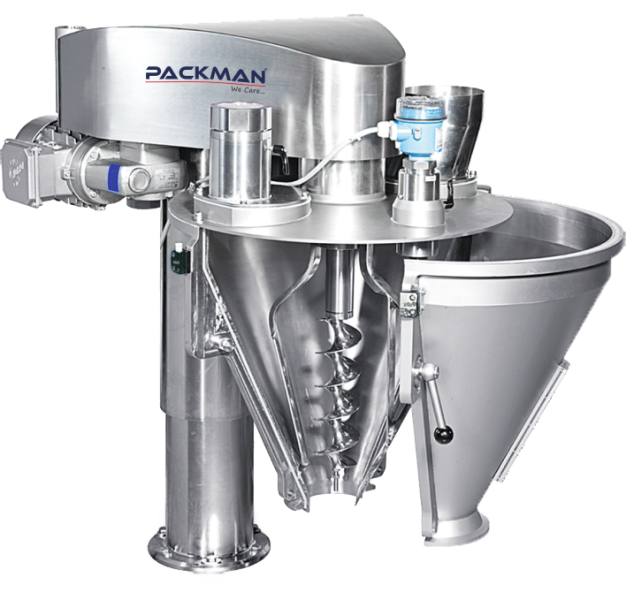
Complete Packaging Solutions for Dehydrated Food ProductsPICK FILL SEAL MACHINE- PACKMAN ENGINEERING The demand for dehydrated food products is increasing rapidly across India and international markets due to their long shelf life, easy storage, and convenience. Products such as dehydrated onion fl ... Continue Reading
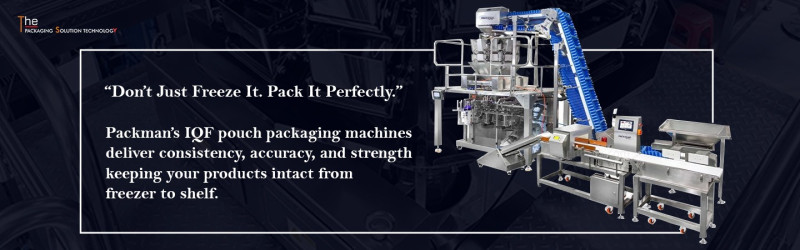
Revolutionizing Frozen Food Packaging with Smart Automation The frozen food industry across Thailand, Vietnam, Malaysia, Indonesia, Singapore, Philippines, Cambodia, Laos, Myanmar, South Korea, Japan, Australia, and the Middle East is experiencing rapid growth. Consumer demand for hygienically pack ... Continue Reading
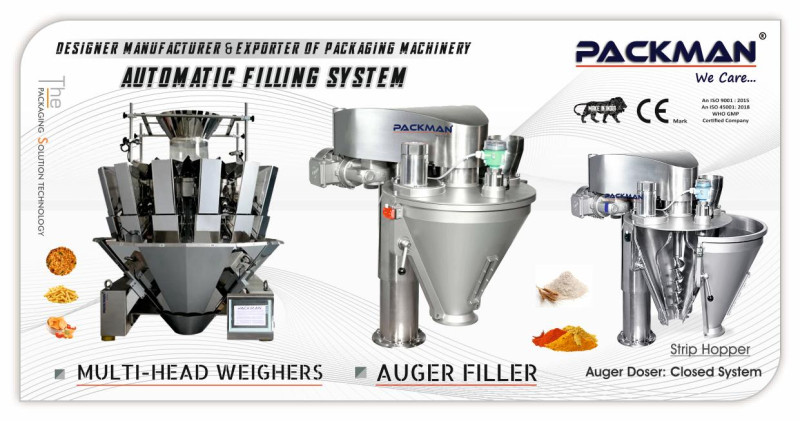
Introduction In today's competitive manufacturing environment, achieving accurate filling and efficient packaging of powders and fine granular materials is essential for maintaining product quality, reducing waste, and maximizing productivity. However, many manufacturers continue to face challenges ... Continue Reading
Complete Turnkey Solutions for the Modern Spice Industry In today’s highly competitive spice industry, producing high-quality spices alone is not enough. Manufacturers must also ensure consistent taste, precise formulations, hygienic processing, high production efficiency, uniform particle si ... Continue Reading