
An ISO 9001:2015/ISO 45001:2018/14001:2015 & CE & WHO GMP Certified Company


In many factories, the real production challenge does not begin at packaging. It begins much earlier — at the stage where multiple ingredients must come together in the correct proportion, at the correct speed, and in the correct sequence.
This is especially true for industries working with powders and granules.
Whether it is a spice manufacturer producing different masala blends, a food company preparing premixes, or a chemical plant handling powdered formulations, maintaining consistency across every batch becomes difficult once production starts scaling up.
At small scale, manual weighing may appear manageable. Operators measure ingredients, transfer them to mixers, and prepare batches according to production requirements. But as the number of recipes increases and daily output grows, the limitations of manual handling become visible very quickly.
A factory producing ten or fifteen different formulations every day cannot afford inconsistency in gram-level dosing. Even small weighing variations affect product quality. In spice manufacturing, a few extra grams of chilli powder or seasoning can change taste balance completely. In premix industries, inaccurate dosing affects nutritional values, product texture, and repeatability. Over time, these small inconsistencies become production losses, customer complaints, and operational inefficiencies.
This is exactly where modern recipe batching systems have changed the way powder and granule industries operate.
Moving Beyond Manual Production
The purpose of a recipe batching system is not simply automation for the sake of automation. Its real purpose is production control.
Modern manufacturing plants today are expected to produce:
Without compromising consistency.
That becomes extremely difficult when ingredient handling depends heavily on manual processes.
In many factories, operators still move raw materials manually from grinding sections to mixers and then toward packaging areas. Powders are transferred through drums, weighed separately, mixed manually, and then rechecked again before packaging. This process consumes time, increases dust generation, and creates unnecessary dependency on operator accuracy.
A properly designed recipe batching system changes this completely by connecting the entire production flow into one controlled process.
The material coming from the grinding system can move directly into storage hoppers or drum storage tanks. From there, ingredients are automatically transferred into the batching system according to the selected recipe. The system controls how much material is discharged, where it is transferred, and in what sequence it enters the mixer.
The result is not just faster production — it is more stable production.
Why Powder & Granule Handling Is More Complex Than It Looks
One important thing many people underestimate is that powders and granules behave very differently inside a production environment.
Fine spice powders like turmeric or chilli behave differently from sugar granules or seasoning flakes. Some materials flow smoothly, while others create bridging inside hoppers. Some generate heavy dust during transfer, while others absorb moisture and affect feeding consistency.
This is why a recipe batching system is not only about weighing technology. The actual engineering behind ingredient movement is equally important.
A good system must understand:
Without proper handling design, even a highly automated setup can create production instability.
Modern systems therefore use controlled feeding methods such as screw feeding, vibratory transfer, pneumatic conveying, or servo-controlled dosing depending on the ingredient characteristics.
Especially in high-capacity factories, this level of control becomes necessary because production cannot stop repeatedly due to inconsistent ingredient flow.
The Importance of Gram-Level Accuracy in Large Production
In recipe manufacturing, accuracy is directly connected to profitability.
Most people think accuracy only affects product quality, but in large-scale manufacturing it also affects raw material cost significantly.
Imagine a production line running thousands of kilograms every day. If even a few grams of high-cost ingredient are overdosed repeatedly, the annual product giveaway becomes substantial.
Modern recipe systems therefore focus heavily on precision dosing.
Today’s advanced batching systems can manage:
Within the same automated cycle.
This becomes especially useful in applications where recipes contain:
The system ensures that every batch follows the exact stored recipe without depending entirely on operator judgement.
Why High-Capacity Systems Are Becoming Common
As factories expand, production expectations also increase.
Earlier, many plants worked with limited ingredient lines and smaller batching setups. But modern food and spice industries now handle a much wider variety of products.
A single plant may run:
on the same production floor.
To support this scale, modern recipe batching systems now include larger Multihead configurations.
Advanced systems today can support up to 120 heads for ingredient handling and weighing operations. This allows multiple ingredients to be managed simultaneously while maintaining continuous production flow.
In practical terms, this means:
For high-volume factories, this becomes extremely important because production bottlenecks usually begin at ingredient preparation stages — not at packaging machines.
Building a Connected Production Environment
One of the biggest shifts happening in manufacturing today is the move toward connected production systems.
Factories are no longer viewing grinding, mixing, storage, batching, and packaging as separate departments. Instead, industries are trying to connect the entire material movement process into one continuous automated flow.
In a modern setup:
This reduces:
It also improves production planning because operators can monitor recipes, ingredient usage, and batch history digitally.
For industries working with powders, this level of production organization becomes increasingly valuable as scale increases.
The Future of Recipe Automation
As consumer markets grow more competitive, manufacturers are under pressure to maintain both production speed and product consistency simultaneously.
That balance becomes difficult without controlled batching automation.
Recipe systems today are no longer viewed only as weighing machines. They are becoming central production management systems that help industries control:
Especially in powder and granule industries, where raw material behavior changes constantly, intelligent batching systems are becoming one of the most important investments for long-term manufacturing growth.
At Packman Engineering>, the focus is on building practical automation systems designed around real industrial production challenges — from grinding and storage integration to high-capacity recipe batching and packaging synchronization.
Because in modern manufacturing, consistency is no longer optional. It has become part of the product itself.
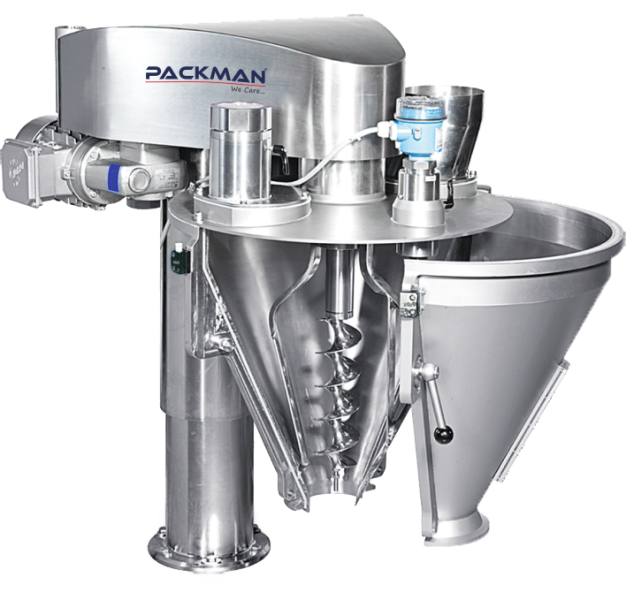
Complete Packaging Solutions for Dehydrated Food ProductsPICK FILL SEAL MACHINE- PACKMAN ENGINEERING The demand for dehydrated food products is increasing rapidly across India and international markets due to their long shelf life, easy storage, and convenience. Products such as dehydrated onion fl ... Continue Reading
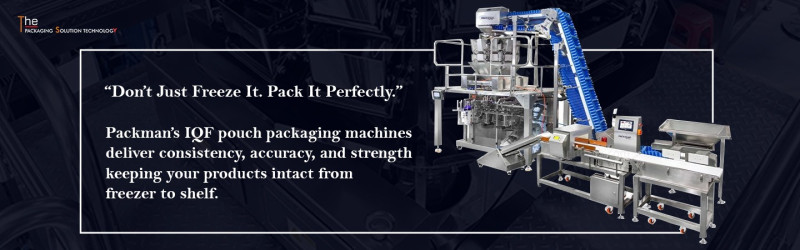
Revolutionizing Frozen Food Packaging with Smart Automation The frozen food industry across Thailand, Vietnam, Malaysia, Indonesia, Singapore, Philippines, Cambodia, Laos, Myanmar, South Korea, Japan, Australia, and the Middle East is experiencing rapid growth. Consumer demand for hygienically pack ... Continue Reading
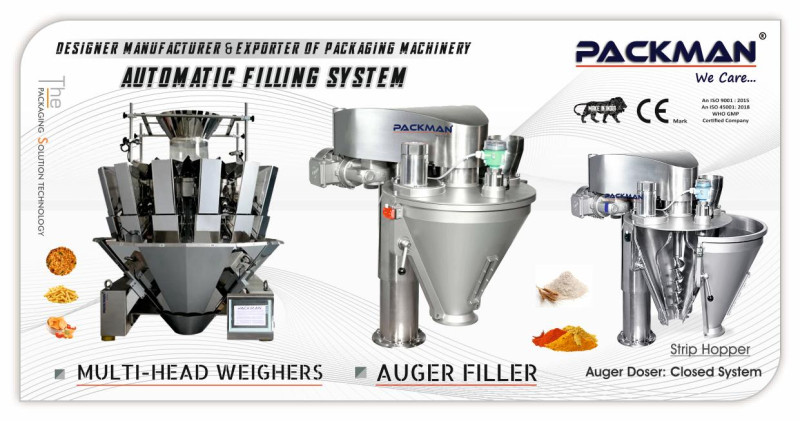
Introduction In today's competitive manufacturing environment, achieving accurate filling and efficient packaging of powders and fine granular materials is essential for maintaining product quality, reducing waste, and maximizing productivity. However, many manufacturers continue to face challenges ... Continue Reading
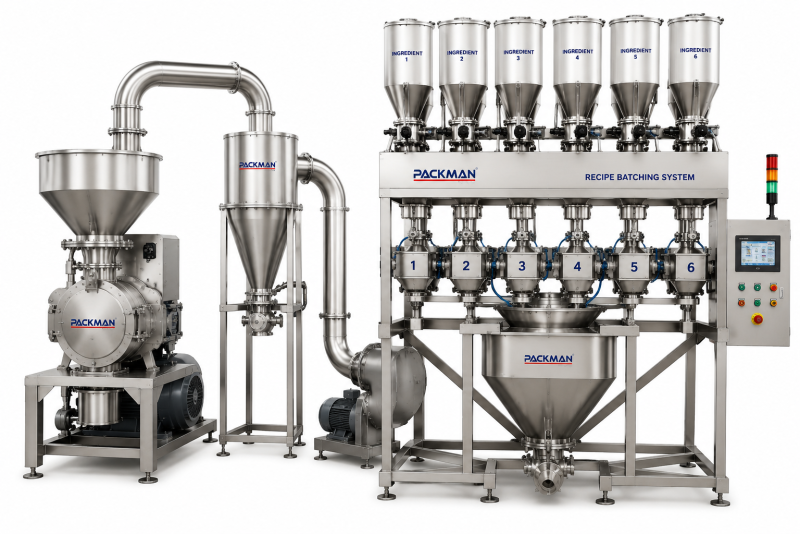
Complete Turnkey Solutions for the Modern Spice Industry In today’s highly competitive spice industry, producing high-quality spices alone is not enough. Manufacturers must also ensure consistent taste, precise formulations, hygienic processing, high production efficiency, uniform particle si ... Continue Reading