
An ISO 9001:2015/ISO 45001:2018/14001:2015 & CE & WHO GMP Certified Company

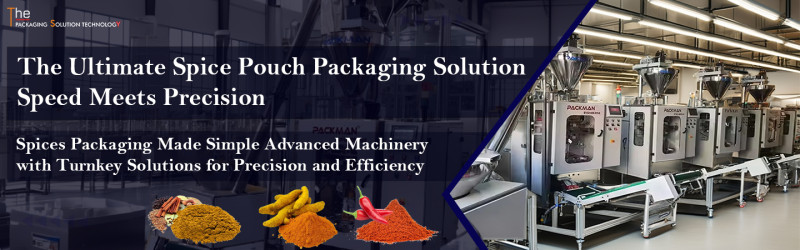
If someone visits a modern spice factory today and compares it with a factory from ten years ago, the difference is immediately visible.
Earlier, many spice manufacturers operated with a simple production mindset. Raw spices arrived in sacks, grinding happened in batches, powders were shifted manually through drums, and workers filled pouches using semi-automatic systems. Production depended heavily on labor, operator experience, and manual handling.
That model worked when markets were smaller and competition was limited.
But the Indian spice industry today is operating in a completely different environment.
Retail shelves are crowded with hundreds of brands. Export buyers demand uniform quality. Supermarkets expect attractive packaging. Online marketplaces require better shelf presentation. Even local consumers now compare packaging quality before purchasing masalas or spice blends.
Because of this, packaging machinery has quietly become one of the most important investments inside the spice industry.
And what is interesting is that this demand is not only coming from giant FMCG companies anymore.
The strongest growth is actually happening among mid-sized regional manufacturers across India who is rapidly upgrading their factories.
One of the biggest reasons behind this machinery demand is the way Indian spice consumption itself has evolved.
A few years ago, many households still purchased loose spices from local markets. Today, consumers increasingly prefer packaged products because they associate sealed pouches with better hygiene, consistency, and freshness.
That single shift has changed the entire production structure of the industry.
Once spices move into branded retail packaging, manufacturers suddenly face much bigger operational responsibilities:
the pouch must look professional,
the sealing must remain stable,
the weight must stay accurate,
the aroma must remain protected,
and the packaging must survive transportation and shelf storage without leakage or damage.
This is where machinery becomes critical.
Because packaging quality directly affects how customers judge the product itself.
A customer opening a leaking turmeric pouch or poorly sealed chilli powder pack immediately loses confidence in the brand — even if the spice quality inside is actually good.
That is why modern spice companies are investing far more seriously in automated pouch packing systems today than they did in the past.
The most active machinery demand in India is currently coming from manufacturing clusters where spice trading, food processing, and export activity are growing together.
Gujarat remains one of the strongest examples of this transformation.
Cities like Ahmedabad, Unjha, Rajkot, and Surat have become highly active markets for spice processing and packaging automation because these regions already have deep connections with spice trading and food manufacturing.
Unjha especially plays a massive role in cumin, fennel, and coriander trade. Huge quantities of raw material move through this market every day. Naturally, as more manufacturers build branded products around these commodities, demand for:
Continues increasing steadily.
But what makes this interesting is that buyers today are not only purchasing machines for higher speed.
Most buyers are now focused on production consistency.
They want machines capable of running continuously with stable filling accuracy, better dust control, reduced wastage, and cleaner packaging appearance.
That mindset is very different from the earlier “only production output matters” approach.
A similar shift is happening in Madhya Pradesh, particularly around Indore.
Indore has rapidly become one of India’s most aggressive food manufacturing regions. The city already had strong roots in Namkeen, flour milling, seasoning, and packaged foods. But over the last few years, spice and premix manufacturing investments have grown significantly as well.
Many factories there are now upgrading older semi-manual production lines into fully connected automated systems.
And the reason is practical.
Once production volume increases, manual operations start creating invisible losses everywhere:
slower material movement,
inconsistent batches,
extra product giveaway,
higher labor dependency,
and more downtime during packaging changes.
Factory owners are realizing that automation is no longer just about reducing labor.
It is about stabilizing the entire production environment.
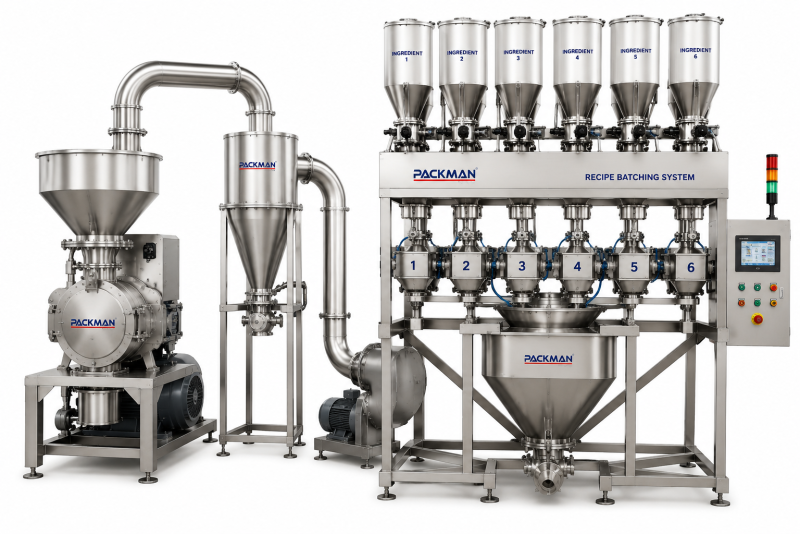
Modern packaging systems today are expected to integrate directly with mixers, storage hoppers, batching systems, and conveying setups. Manufacturers want raw material to move smoothly from grinding to blending to packaging without repeated manual transfer.
This becomes especially important in spice industries because powders behave unpredictably during handling.
Chilli powder flows differently from coriander powder. Turmeric creates different dust behavior compared to seasoning blends. Fine powders may stick near sealing areas and create leakage problems if filling systems are unstable.
That is why modern spice packaging machines are increasingly engineered around powder behavior rather than just packaging speed.
South India tells another important story.
Cities like Hyderabad, Coimbatore, Kochi, Erode, and Bengaluru are seeing strong growth in export-oriented spice processing.
These regions already have strong agricultural and spice-processing ecosystems, but now the focus has shifted heavily toward packaging quality and international compliance standards.
Export buyers today pay close attention to:
As a result, many South Indian factories are investing in:
stainless steel production systems,
dust-controlled packaging environments,
servo-controlled pouch machines,
and multilayer laminated packaging solutions.
The conversation in these factories is no longer only about “how many kilograms per hour.”
Now it is:
“How stable is the sealing?”
“How much product giveaway happens daily?”
“How easy is cleaning?”
“Can the machine run multiple SKUs continuously?”
“How consistent is pouch appearance after long production shifts?”
That shows how much more technically aware machinery buyers have become.
Another major reason behind this rising machinery demand is the rapid expansion of product variety.
Earlier, many spice manufacturers sold only basic products:
Turmeric Powder
Chilli powder
Coriander powder & Many More
Today, even regional brands produce:
Garam Masala,
Pav Bhaji Masala,
chat Masala,
Sambar Powder,
Biryani / Pulao Masala
Peri Peri seasoning,
instant premixes,
Customized export blends & Many More.
Each product behaves differently during processing and packaging.
Some powders flow easily. Others require controlled auger feeding. Some blends generate more dust. Some need stronger laminated barriers for aroma retention.
This variety has forced manufacturers to move toward smarter packaging systems capable of handling multiple products and pouch formats efficiently.
And this is exactly why machinery suppliers today are increasingly expected to provide complete production understanding — not just standalone machines.
Factories now prefer suppliers who understand:
As one connected production ecosystem.
Because in modern spice manufacturing, every stage affects the final product quality.
At Packman Engineering, this industry transformation is becoming visible across nearly every major spice-producing region in India.
The demand for automation is no longer limited to large corporations.
It is coming from ambitious regional manufacturers who understand that future growth depends on:
consistent packaging,
stable production,
better presentation,
and scalable manufacturing systems.
Because today, in the spice industry, packaging machinery is no longer simply factory equipment sitting on the production floor.
It has become part of how a brand builds trust in the market.
Complete Packaging Solutions for Dehydrated Food ProductsPICK FILL SEAL MACHINE- PACKMAN ENGINEERING The demand for dehydrated food products is increasing rapidly across India and international markets due to their long shelf life, easy storage, and convenience. Products such as dehydrated onion fl ... Continue Reading
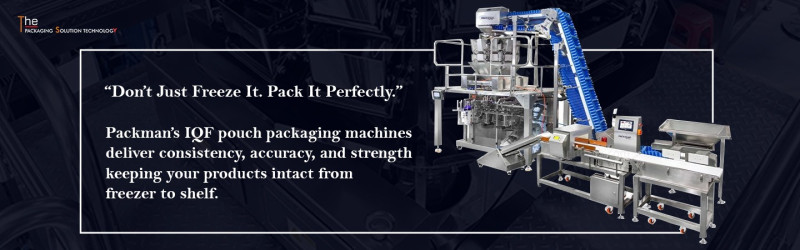
Revolutionizing Frozen Food Packaging with Smart Automation The frozen food industry across Thailand, Vietnam, Malaysia, Indonesia, Singapore, Philippines, Cambodia, Laos, Myanmar, South Korea, Japan, Australia, and the Middle East is experiencing rapid growth. Consumer demand for hygienically pack ... Continue Reading
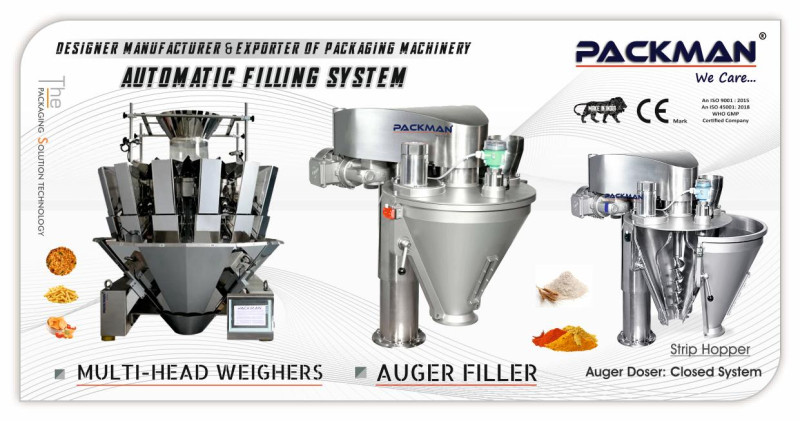
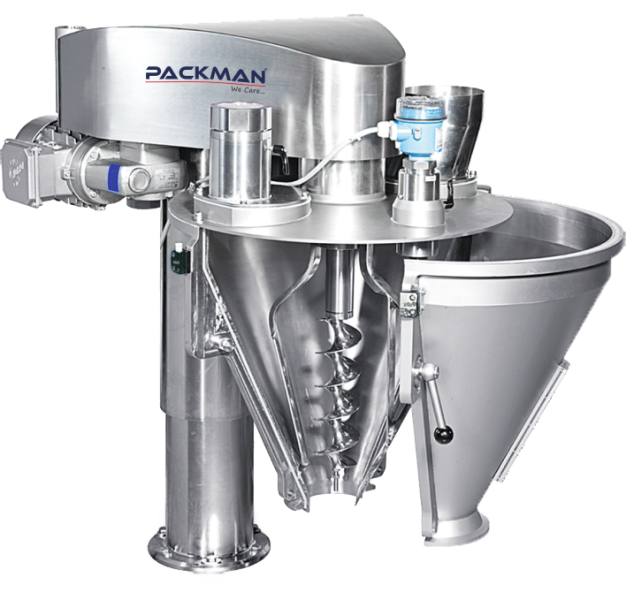
Introduction In today's competitive manufacturing environment, achieving accurate filling and efficient packaging of powders and fine granular materials is essential for maintaining product quality, reducing waste, and maximizing productivity. However, many manufacturers continue to face challenges ... Continue Reading
Complete Turnkey Solutions for the Modern Spice Industry In today’s highly competitive spice industry, producing high-quality spices alone is not enough. Manufacturers must also ensure consistent taste, precise formulations, hygienic processing, high production efficiency, uniform particle si ... Continue Reading